Home › Desert truffle
The ingredient
What is desert truffle?
A wild fungus that cannot be farmed, appears only after the rains, and has been valued across the Middle East for a thousand years — including, specifically, for the eyes.
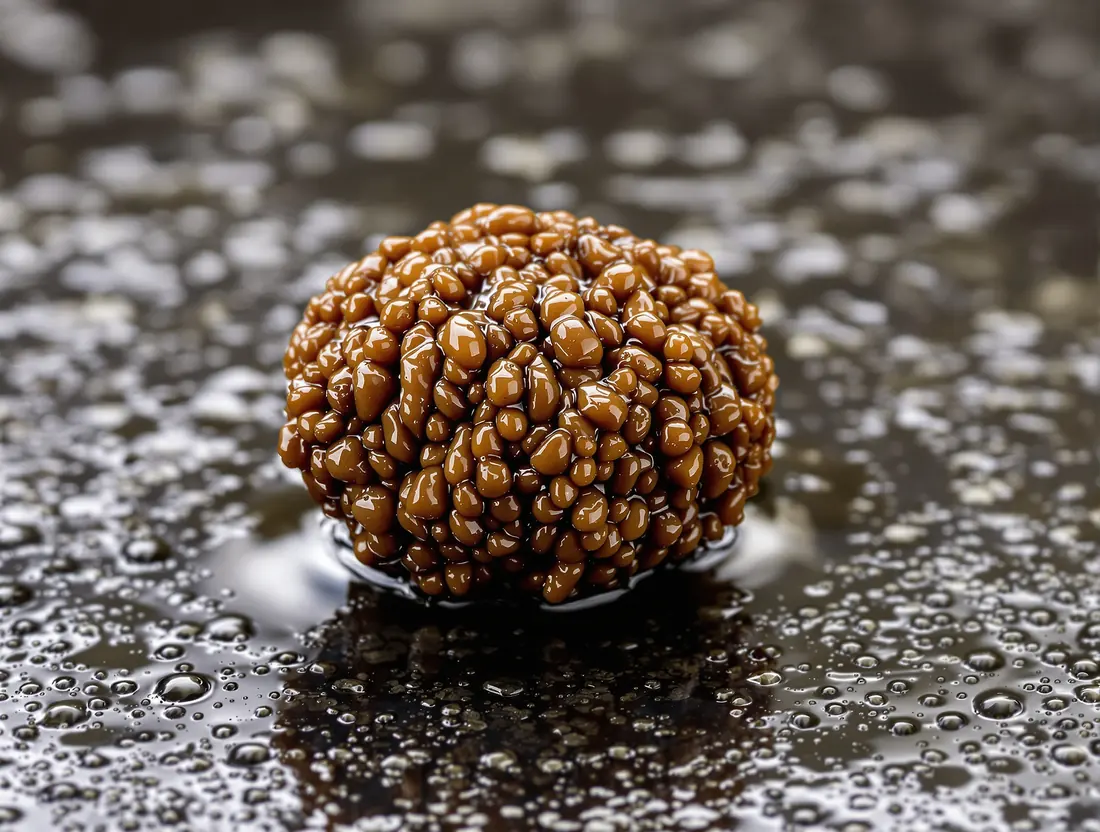
A pearl of the desert
The desert truffle — known scientifically as Terfezia, and called zubaydi, kame'a or terfez across the Arab world — is a subterranean fungus that grows wild in the sandy soils of the Middle East, North Africa, the Mediterranean basin and Central Asia.
It is one of the few edible fungi that thrives not in forest shade but in open desert, adapted to some of the harshest growing conditions on earth.
Unlike the European truffle, which partners with oak and hazelnut, the desert truffle lives in symbiosis with a low flowering shrub called the Sunrose (Helianthemum). The shrub supplies carbohydrates through photosynthesis; the truffle extends the plant's reach for water and phosphorus in nutrient-poor soil.
The truffle rains
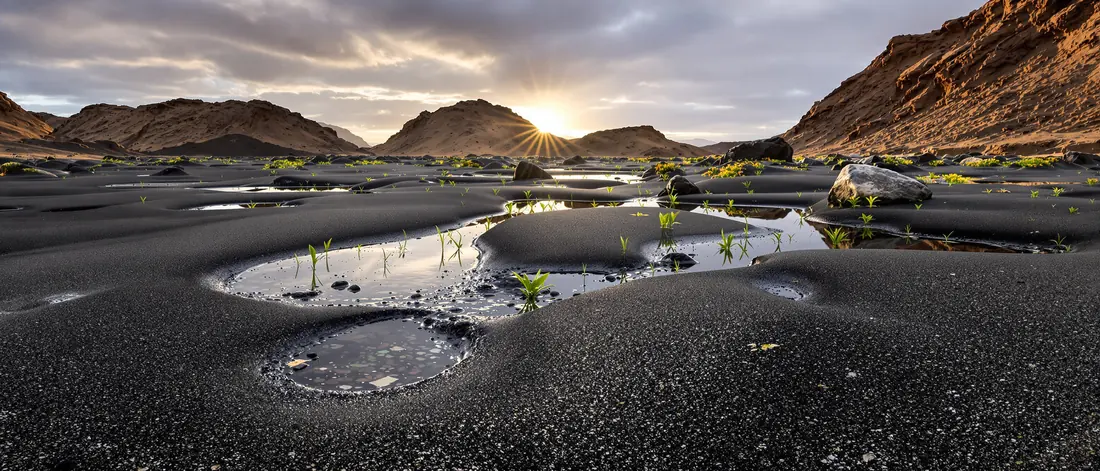
Desert truffles do not grow on demand. Their emergence is governed entirely by weather — the pattern of autumn and winter rainfall that foragers have long called the truffle rains. A season of well-timed autumn rain followed by a mild winter produces an abundant harvest. A dry autumn yields almost nothing.
They develop underground through winter and push toward the surface in late winter and early spring, betrayed only by a subtle cracking and doming of the ground above them. Experienced foragers read those cracks the way others read maps.
The harvest is brief — in a good season it may last only a few weeks. Truffles are dug by hand, cleaned and eaten fresh: roasted in embers, simmered in broth, or preserved in brine.
No desert truffle species is cultivated at commercial scale anywhere in the world. Every one is wild-harvested, which is part of what makes it rare.
From rain to capsule
How a season becomes an extract
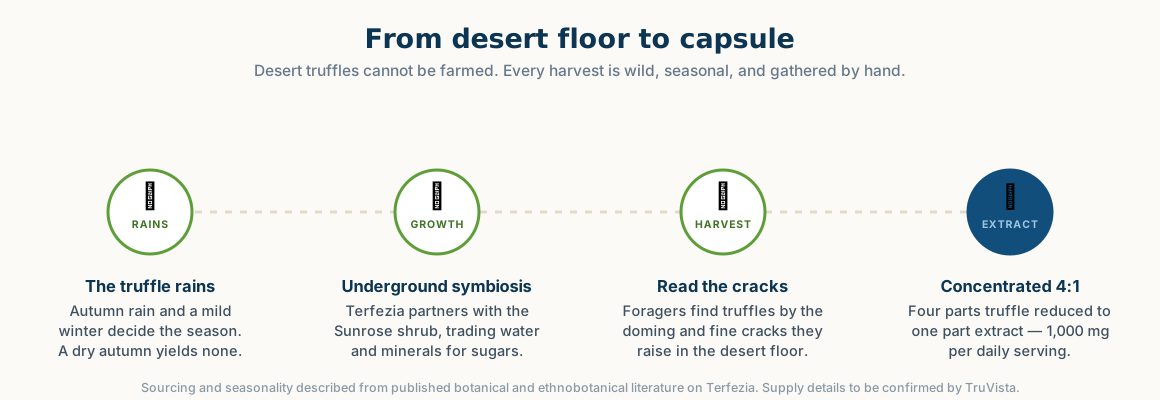
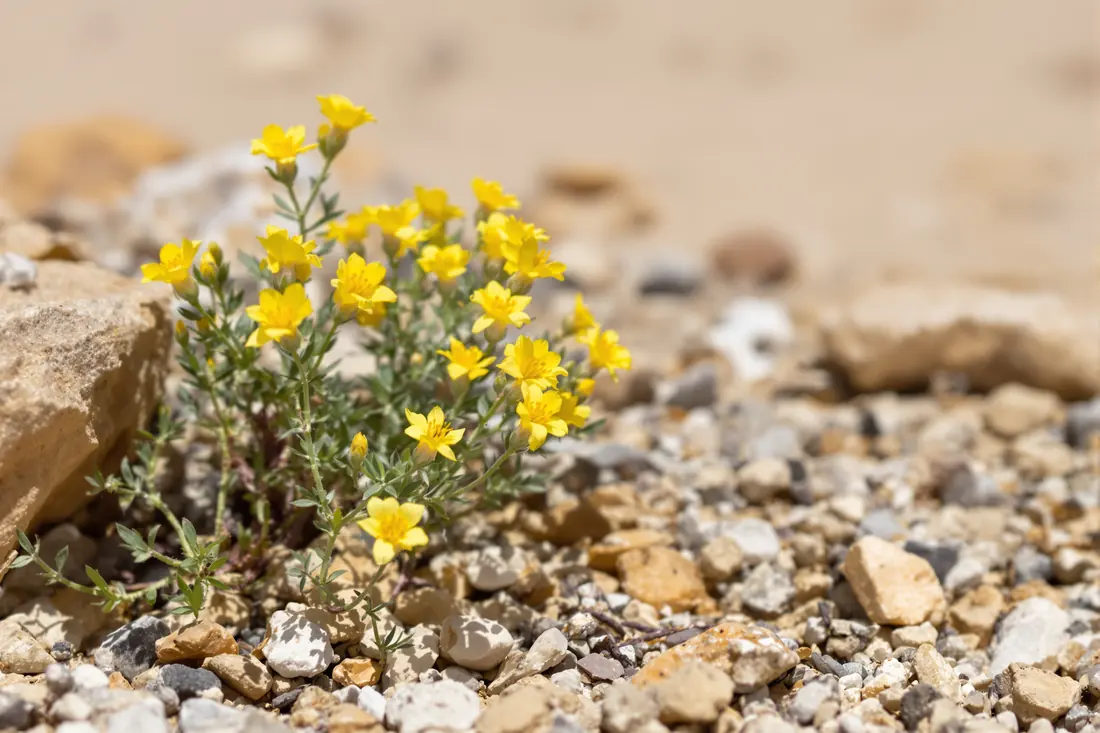
The shrub feeds the truffle sugars; the truffle reaches further for water and minerals.
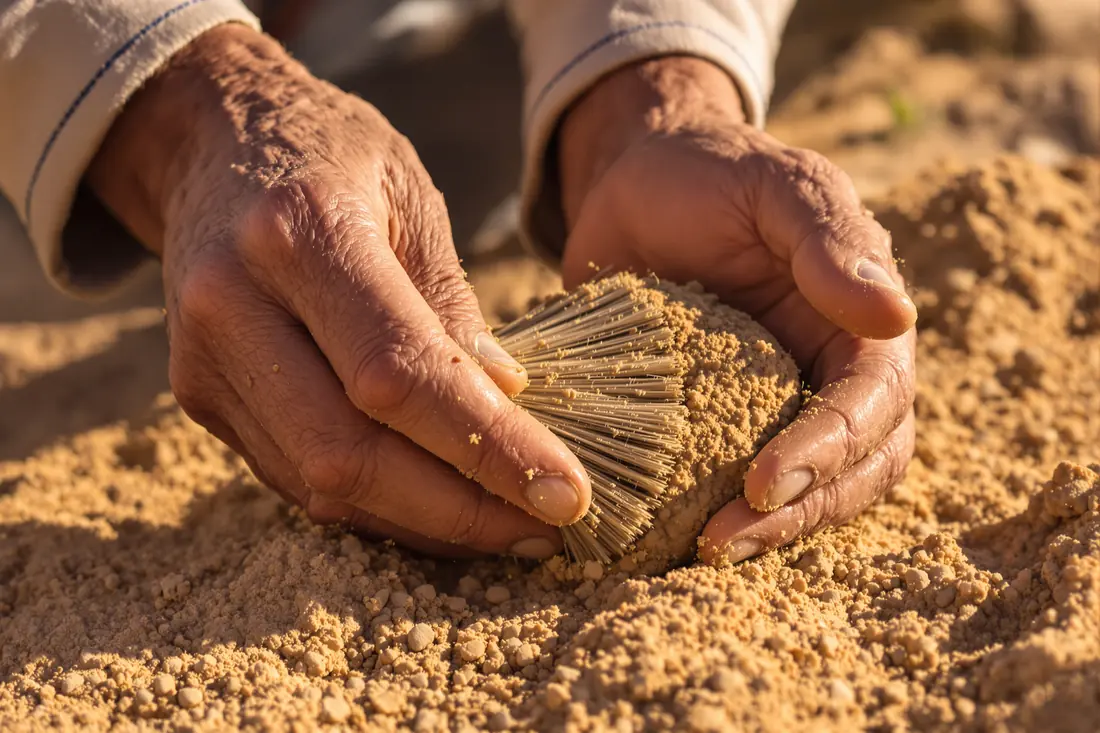
Foragers read the fine cracks and doming a truffle raises in the soil above it.
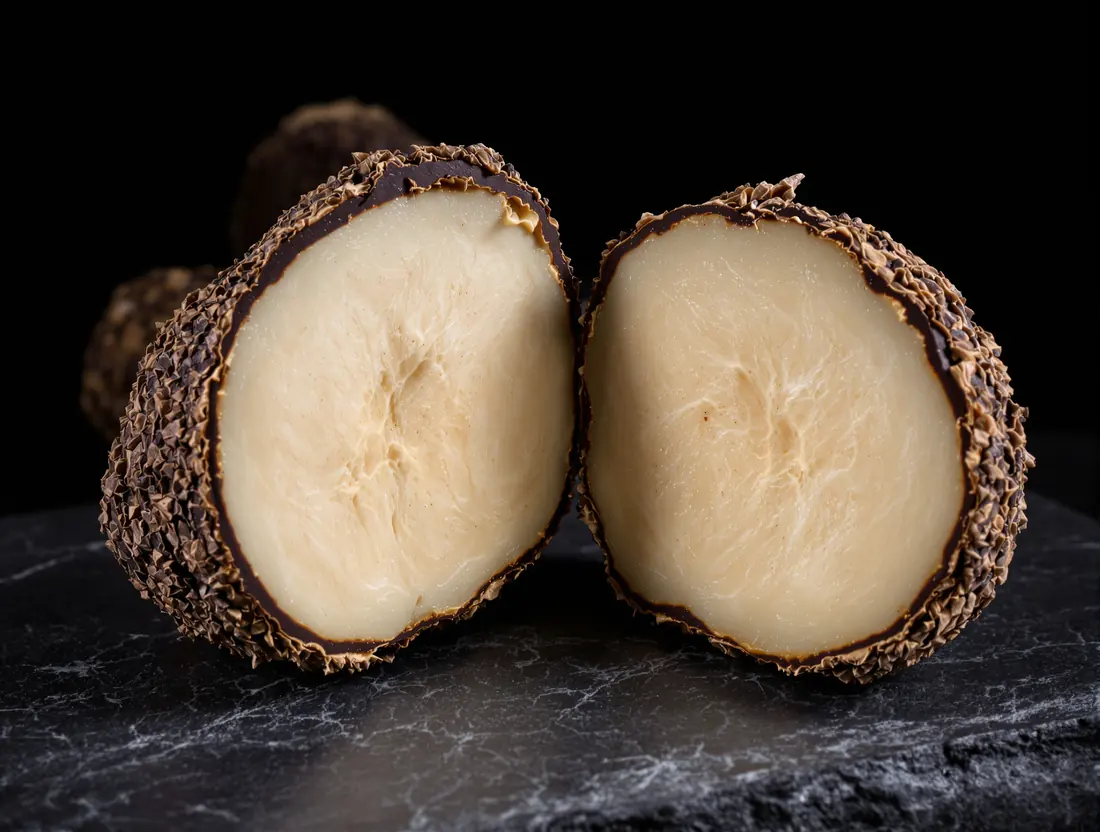
Pale, dense, marbled flesh — the source of the 4:1 concentrated extract.
Composition
What researchers have found inside it
Desert truffle carries an unusual set of compounds for a single ingredient. Here is what the published analyses report — and what that does and does not tell us.
Macular carotenoids
Lutein, zeaxanthin, beta-carotene, lycopene and anthocyanins — the pigment family the macula concentrates.
Ergothioneine
A stable antioxidant found almost exclusively in fungi. The body has a dedicated transporter for it and concentrates it in several tissues, including the eye.
Naringenin
A flavonoid more familiar from citrus, and unusual among fungi. Studied in retinal cell models under oxidative stress.
Resveratrol
A polyphenol studied for anti-inflammatory activity, present alongside oleic acid and stachydrine.
Complete protein
Desert truffle contains all essential amino acids — unusual for a non-animal source. Published protein content varies by species and season.
Minerals & fibre
High in phosphorus, potassium and iron; low in sodium and fat; a source of both soluble and insoluble fibre.
Valued throughout history
The desert truffle has been prized across the Arab world, the Mediterranean and Central Asia for thousands of years — recorded in ancient Egyptian sources, treated by the Romans as a luxury food, and traded along Silk Road routes as both delicacy and medicine. Greek and Roman writers documented its appearance after storms and rain, attributing its sudden emergence to the divine. Medieval Islamic physicians included it in their pharmacopeias.
It was not merely food. Across generations of healers from the Arabian Peninsula to North Africa, Terfezia was valued specifically for the eyes. Its water was applied for irritation and inflammation; eating it was believed to preserve sight.
“Truffles are like manna, and their water heals eye diseases.”
A cultural treasure
In communities across Saudi Arabia, Kuwait, Iraq, Jordan, Libya, Morocco and Tunisia, truffle season is an event. Families go into the desert together after the winter rains, reading the terrain for the surface cracks that signal a truffle below. The harvest is communal, the cooking immediate, the sharing generous. A good season is cause for celebration; a poor one is mourned.
The truffle carries different names in different places — terfez in North Africa, zubaydi or kame'a in the Gulf and Levant, fugga in Libya — but its standing as a gift of the desert is constant. It has been called the pearl of the desert in Arabic poetry.
TruVista was founded on respect for that tradition. Our commitment is to bring the ingredient to the people who care about it, and to be straight about what is known and what is not.
An ancient ingredient, honestly described.
See exactly how much goes into each formula, and what the research does and doesn't show.
See the products Read the science